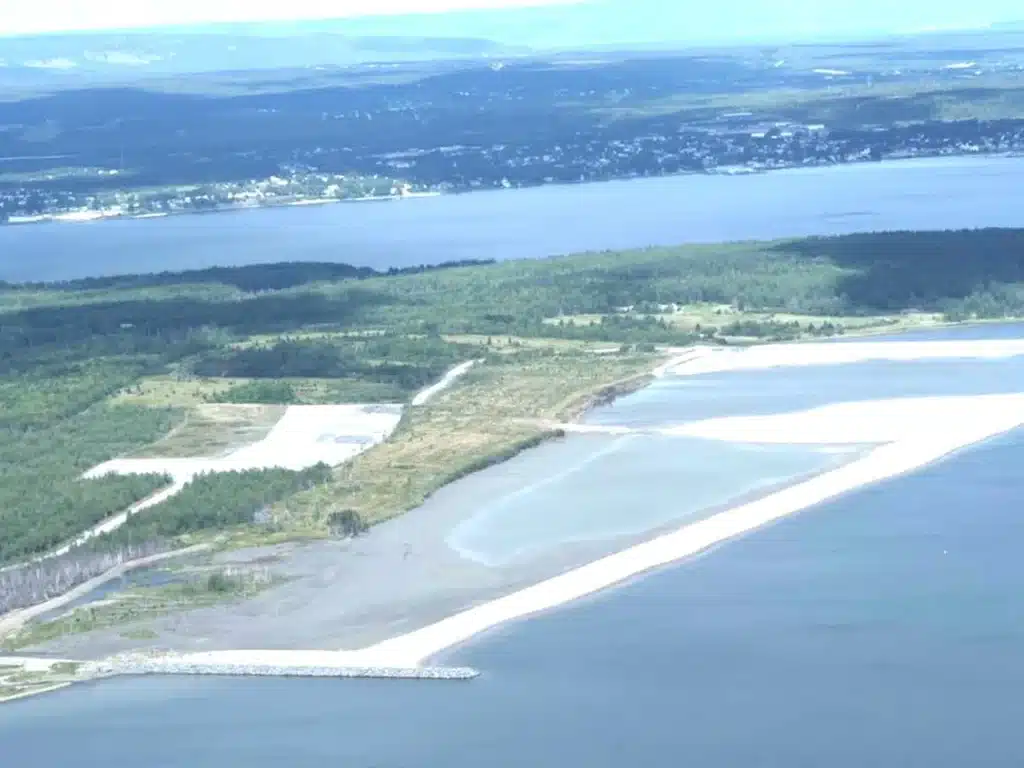
Council vote offers rethink on Sydney Harbour development
What the Council chooses to put in place now will shape how this public asset is stewarded and governed, and the benefits it delivers, for generations to come.

The waterfront of Sydney, Nova Scotia, Canada including the boardwalk
On Tuesday (February 3, 2026), CBRM Council will meet for the first time since the January 20 session at which six councillors (MacMullin, MacNeil, Paruch, G. MacDonald, MacKeigan, Sheppard-Campbell) voted against continuing negotiations with SHIP.
Their vote has forced a space for the first Council conversation about what a contract, tender, and community benefits for the greenfield site should look like. While there have long been councillors (some consistently so) opposing the renewal of the untendered contract, this marks the first time in eleven years that enough have pressed pause on behalf of the community.
In the agenda for Tuesday’s meeting, Council Agenda Requests lists “Policies and Procedures for the Port Site Asset: Councillor Steven MacNeil”. If Council is looking to turn the page (no small feat) and focus on policy for future greenfield development, this is an important moment to reflect on what the last decade has taught us.
OWNERSHIP OPPORTUNITIES
Will the CBRM seek to retain ownership and control of the site long-term? Will future agreements include an option to buy land or secure a 99-year lease (ownership in all but name), where such a lease would move key decisions (kinds of activities, community benefits, environmental protections) from the CBRM to the proponent?
In November 2017, an in-camera meeting of Council was called to approve an Option and Development Agreement, giving SHIP the ability to lease the port site for 99-years and buy the 1,000 acres referred to as the logistics site.
In his January 27th CBC interview, Mr. Barbusci declared that “We triggered. We have the conditions met. But they wanted to renegotiate so we just let it be, it’s in legal. It’s been in legal for a year.”
If SHIP triggered their option to lease the site for 99 years in November 2024, and 14 months later it remains “in legal,” some uncertainty exists about whether they have, in fact, met the conditions.
COMMUNICATION OPPORTUNITIES
In an interview on CBC Information Morning on January 26, Barbusci took issue with councillors not reaching out to him. When asked about progress on the greenfield site, he said, “I didn’t have an opportunity to meet anyone over the last year. No one’s taken the time. There are new councillors that I haven’t met, so how can they pass judgment on us?”
Is it the responsibility of individual councillors to call project proponents to ask for updates, or is it the responsibility of proponents to create and adhere to a reporting schedule (i.e. semi-annually for the duration of the contract)?
In the original 2015 exclusivity agreement, SHIP was obligated to provide bi-weekly updates, a requirement that was not met; in 2016, Mr. Barbusci committed to monthly meetings with CBRM Council. These have not materialized and over the last ten years, councillors have expressed concerns about transparency, getting progress updates, and being pressured to make decisions without adequate time for review, questions, or outside advice.
Where Mr. Barbusci hasn’t been able to figure out how to consistently communicate with CBRM Council in more than a decade, can a tender embed reporting frequency and format as a condition for maintaining the contract in good standing?
GOVERNANCE OPPORTUNITIES
In 2021, the motion to extend SHIP’s exclusivity agreement included the creation of the SHIP Steering Committee. As of May 2024, the committee had no chair, no minutes, and no record of meetings. Committee member, Councillor Eldon MacDonald, guessed that it had been a year and a half since the committee met. Committee member, Councillor Steve Gillespie said he wasn’t sure if it was a committee or an advisory group. Councillor Lorne Green, the third of three committee members, said the committee never met.
If a tender is advanced, and a committee is struck, can the Committee be required to set a schedule of meetings, elect a Chair, be listed in the official list of committees on the CBRM website, and keep and file meeting minutes? All other CBRM Committees – audit, accessibility, police commission, etc. – adhere to these requirements.
PORT AUTHORITY OPPORTUNITIES
Lastly, as more opportunities present themselves at our doorstep (global shipping, Coast Guard infrastructure, offshore wind), is it time for the CBRM to look again at a Port or Harbour Authority to coordinate port development, maximize multiple port assets, and concentrate port expertise in a body that can be both responsive to developers and accountable to the community?
While the Port of Sydney Corporation was created, in part, to serve a purpose like this (closer to a Harbour than Port Authority), it has been relegated in recent years to managing cruise ship traffic, with the greenfield site file back in the Mayor’s Office.
Is it time, alongside the development of greenfield site policies and a tender, to examine the benefits and risks of a Harbour Authority or Port Authority (two very different entities in Canada) and assess the fit and possibility of each for the governance of Sydney Harbour?
Both are plentiful in Atlantic Canada, with Port Authorities governing the harbours of Halifax, St. John’s, Belledune, and St. John and Harbour Authorities in Digby, Lunenburg, Shelburne, Yarmouth, Canso, Louisbourg, Inverness, Mabou, and Cheticamp.
This is a rare pause. What the Council chooses to put in place now will shape how this public asset is stewarded and governed, and the benefits it delivers, for generations to come.
Erika Shea is the President & CEO of New Dawn Enterprises, Canada’s oldest non-profit community development corporation.
Cape Breton Post, February 2, 2026