
Looking at historical tendencies and Cape Breton’s greenfield site
As we embark on the next chapter for the greensfield site and its development, it’s worth revisiting the August 18 council meeting and what it tells us about our historical tendencies.
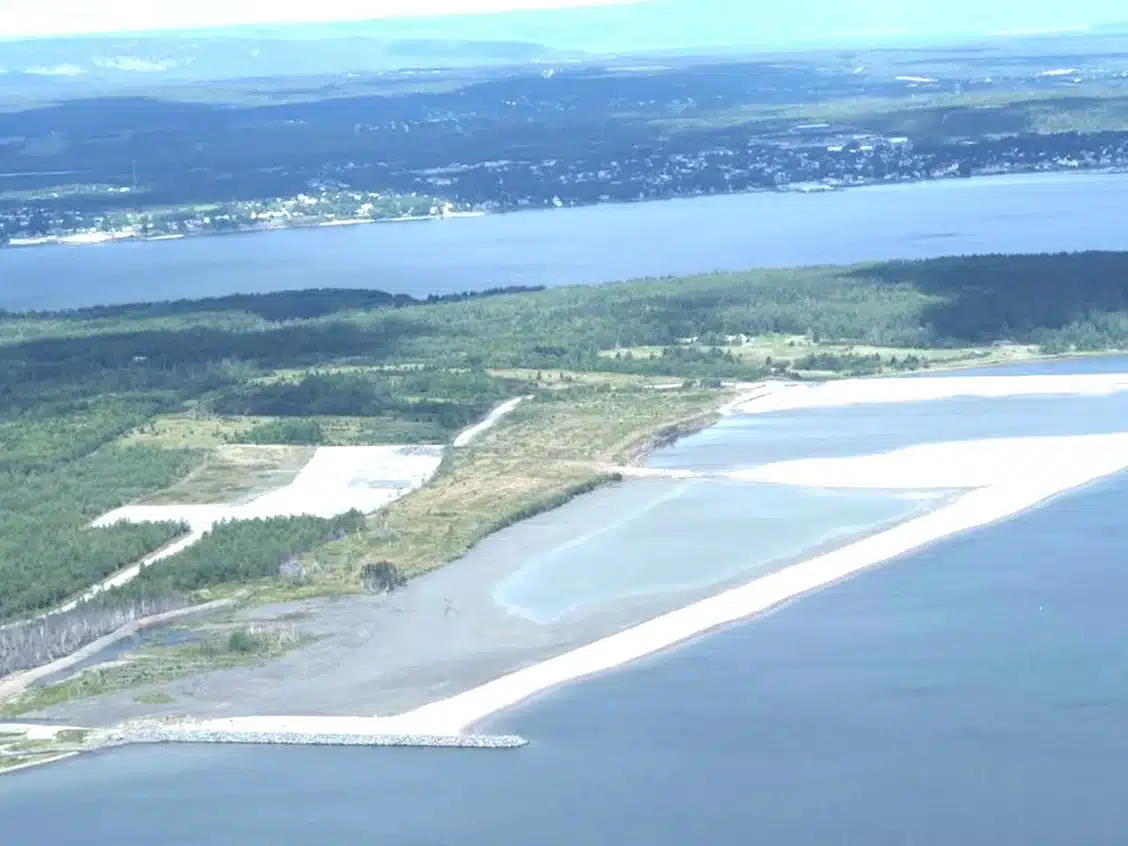
Late last week, Cape Breton Regional Municipality council clarified that it would hire a consultant to lead a competitive process for the development of the greenfield site in Edwardsville.
An emergency meeting of council was called on Friday, September 11 to address the confusion created by council’s meeting on August 18, where the mayor and six councillors (Steve Parsons, Eldon MacDonald, Darren O’Quinn, Steve Gillespie, Paul Nickituk, and Esmond Marshall) voted to direct CBRM staff to restart negotiations with just SHIP while a consultant was hired and paid to conduct a parallel process for all companies that were not SHIP.
The year 2026 has been an active year for the greenfield site. In January, council voted not to renew SHIP’s exclusive contract (in effect since 2015). In July, council voted to pursue an independent consultant to design a public tendering process.
With its July direction affirmed in Friday’s emergency council meeting, we’re once again positioned to right a decade-long wrong by issuing a transparent, public, competitive tender – one that the community has long called for, and one that six members of council (Earlene MacMullin, Gordon MacDonald, Glenn Paruch, Kim Sheppard-Campbell, Steven MacNeil, and Dave MacKeigan) have spent years fighting for.
As we embark on this next chapter, it’s worth briefly revisiting the August 18 meeting and what this meeting tells us about our historical tendencies when it comes to the greenfield site.
TRUST US
At the August 18 meeting, as in many debates on SHIP over the last decade, advocates for the company around the council table struggled to back up their feelings with evidence. They asked us to trust them that SHIP is among the best in the industry, SHIP has already done all the work for the greenfield site, no one else has come forward to develop the site, and time is of the essence.
And while this – asking us to trust their unsubstantiated claims, or their feelings – might fly over coffee at Tim Hortons, in council chambers it represents a failure of basic municipal due diligence.
MATERIAL MIX-UP
Feeling: According to Eldon MacDonald, SHIP has “been vetted by both senior levels of government. They’ve been vetted by the best in the industry in the world. They have proven and it has been indicated by those entities that they do have everything in place to be able to move this project forward.”
Fact: Novaporte Wind Canada LP (different from Novaporte LP and different from SHIP) has self-disclosed that they qualified to put in a future proposal for offshore wind development (they are not included in the list of pre-qualified bidders released by the Province of Nova Scotia to date). Novaporte Wind Canada LP has not been formally vetted by any senior level of government for proposals related to the greenfield site (SHIP’s contract for the Greenfield site ended in 2024 before the October 2025 call for submissions for offshore wind).
SHIP has not been formally vetted by any senior level of government. The greenfield site is a municipal asset and neither the province nor the federal government keeps lists of good companies for municipalities to do business with.
Coun. MacDonald’s statement mixes up two very separate matters: qualification to bid on a provincially administered offshore-wind opportunity and CBRM’s selection of a developer for municipally owned land.
There has never been a council discussion of a process for companies to be vetted by “the best in the industry in the world.” If there is such a process, and SHIP has gone through it, it is incumbent on the councillor making this claim to provide evidence of the same. Otherwise, the claim is a feeling, not a fact.
There is public record of the greenfield site receiving provincial environmental assessment approval for a container terminal and dredging project in 2009. There is no public record of this being transferred from Laurentian Energy or CBRM to SHIP or of it being updated to apply to a wind-marshalling area.
If a councillor wishes to make the claim that SHIP has “everything in place to be able to move the project forward,” it is incumbent on them to provide to their council colleagues and the community the permit name, issuing authority, holder, issue date, expiry date, transfer history, approved undertaking, and present status.
Councillors are elected to serve, protect, and advance the public interest, and this includes investigating the claims of private sector companies attempting to negotiate for a public asset.
NO ONE ELSE KNOCKING?
Feeling: No one else has come forward to express an interest in the site (as expressed on August 18 by councillors Parsons, Eldon MacDonald, and Nickituk).
Fact: As eloquently conveyed by councillor MacMullin at the August 18 meeting, discussing the greenfield site with anyone other than SHIP was prohibited by SHIP’s decade-long untendered exclusive contract. Accepting an unsolicited, untendered proposal for exclusive rights to a municipal site, like CBRM has done to date, is an anomaly. Most other jurisdictions follow public competitive processes for the development of their assets.
Now that the tender process will proceed, council can evaluate other interest in the site. It will be the first time since 2015 that they are allowed to do so. To suggest that the CBRM must proceed with SHIP because there is no other interest after that interest was precluded by the exclusivity agreement for 10 years is illogical and dishonest.
REALITY CHECK
Feeling: According to Eldon MacDonald, “the window is closing very quickly on the opportunity for Sydney harbour.” Or, as Coun. Nickituk added to the debate: “I’ve been in Halifax and I’m telling you I know business in Halifax and I’ve been talking to big business guys and there’s guys making moves now to start constructing components of some of these things”.
Fact: The Province of Nova Scotia continues to move through a structured public competitive process for offshore wind and will tender for the development of three areas later this year: Sydney Bight (east of Cape Breton Island), Middle Bank (on the eastern Scotian Shelf, southeast of Halifax) and French Bank (southeast of Cape Breton).
The province is not going to cancel the offshore wind tender because the CBRM hasn’t decided who will develop the greenfield site and for what purposes. If there is an economic case for doing so, offshore wind will be developed in the Sydney Bight.
Sydney harbour, unlike other harbours in Nova Scotia, is blessed with an abundance of land that could be used as a wind-marshalling site, including the massive property that is currently being used as a wind-marshalling site.
Atlantic Canada Bulk Terminal (ACBT) tied for first place in Atlantic Canada in Net Zero Atlantic’s 2025 evaluation of cost-effectiveness and readiness for wind-marshalling expansion. The Greenfield site ranked nine out of 10. The greenfield site will take 48-63 months to develop (to ACBT’s 27-51 months) and cost between $346 million and $653 million to ACBT’s $135 million to $230 million.
It is certainly possible that the offshore wind opportunity is so large that it will eventually require both the ACBT site and the greenfield site, but this possibility does not support the urgency and suggestions of loss of opportunity put forward by councillors Parsons, Eldon MacDonald, and Nickituk.
Aside from Sydney having multiple sites amenable to wind marshalling, offshore wind development itself doesn’t happen overnight. A timeline for offshore development likely looks something like this: call for bids (2026-2027), bids evaluated and licenses awarded (2027-2028), marine surveys, wind measurements, and preliminary engineering (2027-2030), turbine orders and major contracts (2029-2032), port preparation and arrival of early construction materials (2029-2032), major foundation, turbine and cable deliveries (2031-2034), offshore construction (2032-2036).
Taking 6-12 months to make sure that the development of the Greenfield site goes to the most qualified company is insignificant in the context of this timeline. And, since several councillors positioned SHIP as years ahead of everyone else, if SHIP were to win a CBRM tender it would not even notice these extra few months.
THE COMPANY YOU KEEP
In addition to leading with their feelings, the mayor and six CBRM councillors voting on August 18 to restart negotiations with SHIP did so despite repeated threats by SHIP to pursue legal action against the CBRM if its contract and what it regarded as an existing long-term lease of the greenfield site were not restored.
Councillors MacMullin, Gordon MacDonald, and Gillespie, and Deputy Mayor Paruch each spoke to the threats that have been made by SHIP to pursue legal action against the CBRM.
In January 2026, Albert Barbusci took the opportunity to let the community know that he believes the greenfield site is legally his now. He said in his CBC Information Morning interview, “We’ve earned the right to use our own Novaporte site because we’ve put in our own money and our own time … We have our option and lease agreement. We triggered it in 2024. They need to recognize that.”
Is this the kind of person the mayor and those six councillors want the community to be in business with for the next hundred years?
LESSONS FROM THE PAST
Watching the August 18 meeting of CBRM council felt more like 1926 than 2026. A century after coal companies decimated families and communities across Cape Breton, elected officials should not be asking the public to trust another developer’s assurances.
Watching the public portion of the September 11 council meeting was a reminder that we can always choose differently.
A well-designed public tender can do what a decade of exclusive negotiations could not: cast the net, test who has the experience and capacity to deliver, interrogate what they propose to build, and articulate what the public would receive in return. It can require companies to substantiate their claims. And it can help the CBRM establish the commitments, timelines, and protections that should accompany any agreement involving this public asset.
Councillors MacMullin, Gordon MacDonald, Paruch, Sheppard-Campbell, MacNeil, and MacKeigan deserve considerable appreciation and credit for their persistence in bringing us to this point. They have protected the community’s right to know its options before committing its land, and to expect more than assurances and good vibes from those seeking to develop it.
Erika Shea is the president and CEO of New Dawn Enterprises, Canada’s oldest non-profit community development corporation.
Cape Breton Post, September 15, 2026


