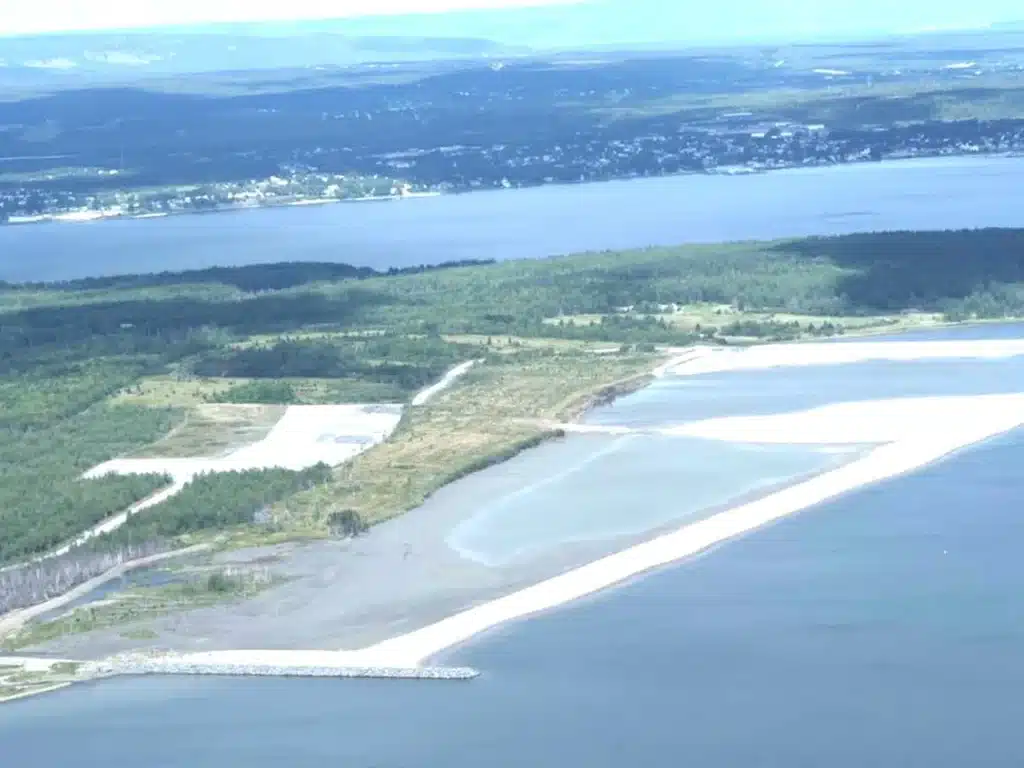
Cape Breton’s greenfield site deserves transparent, competitive process
The site is too important to be governed by public uncertainty, private expectations, and handshakes.

Every year the Cape Breton Regional Municipality issues public tenders for everything from road paving and snow removal to engineering studies and public buildings.
They do so because competition promotes transparency, encourages better ideas, strengthens public confidence in the work and in public institutions, and helps to ensure the best value for taxpayer dollars. It is difficult to imagine a municipal asset more deserving of that same process than the greenfield site.
In January, council voted to end SHIP’S exclusive untendered contract for the marketing of the greenfield site.
This was a contract that began, in the words of SHIP majority shareholder Albert Barbusci, with a handshake with the mayor 12 years ago. It was formalized in 2015, renewed in 2018, renewed again in 2021, and expired in 2024. Council put a formal end to notions of another untendered contract with SHIP by virtue of a tie vote (that translated to no extension).
In February, Councillor Steven Macneil put forward a motion to hold a council workshop on tendering the marketing of the greenfield site.
The motion passed, but only after reminders from Councillor Earlene Macmullin and Councillor Steve Parsons, that a workshop allows council to think through what an expression of interest (EOI) or a request for proposals (RFP) for the site should look like. Any actual EOI or RFP would have to come back to council for review and approval. We’ve heard nothing since.
PUBLICLY ANSWER QUESTIONS
A tender (by EOI or RFP) invites consideration of the greenfield opportunity from companies around the world and allows the CBRM to choose the most qualified applicant. It also requires that the municipality publicly answer some key questions before any agreement is signed:
- How long will the tender be open for?
- Will it be a tender that is both public and with targeted invitations?
- If there are targeted invitations, what criteria is used in issuing a targeted invitation?
- What qualifications and port development experience are applicants required to have?
- What is the length of the contract to be awarded and what are the financial terms?
- What milestones have to be met throughout the contract to remain in good standing?
- What kind of expertise does the CBRM need to bring in to help evaluate proposals?
- If the marketing contract could evolve into a development or operating agreement, what expectations regarding environmental protection, community benefit, financial return, and public accountability will be established from the outset?
- And perhaps, mostly importantly of all: Will the port marketer have an option to purchase the Greenfield site, or all but purchase it via a 99-year lease, as was the case in the SHIP contract?
DISCUSSION IS REASONABLE
At the June 23 meeting of council, Steven Macneil attempted to get an update from CAO Demetri Kachafanas, but his request to have the port tender back on the council agenda was denied. It hardly seemed like an unreasonable request given that there has been no substantive public discussion of the greenfield site since February.
Mr. Barbusci, along with Chief Terry Paul representing Membertou as a minority shareholder, returned to CBC Information Morning this week to discuss offshore wind and their partnership to participate in future offshore wind development.
When the conversation turned to the greenfield site, Mr. Barbusci, as he has done many times in the past, stressed the need for the CBRM to move as quickly as possible. This has been a common theme over the last decade — the need for things to be rushed through council, only to be followed by years in which the greenfield site remained unchanged.
All levels of government should, of course, move quickly. But there is a difference between speed that has been built on clear, consistent, public process and speed that is the result of pressure from outside private sector companies.
The greenfield site is a hard-won, commercially valuable, globally relevant asset that the municipality has owned for 15 years.
If, after 15 years, there is not a clear, consistent, public process for its marketing and development, and if it remains as barren as the day it was bought, we should think very carefully before following any more direction from the few public officials and private majority shareholder who have been the project’s most consistent representatives.
We certainly should not ask how high when the same majority shareholder tells us to jump again.
PROPERTY CLAIMS
Mr. Barbusci also took the opportunity to let the community know that he believes the Greenfield is legally his now: “We’ve earned the right to use our own Novaporte site because we’ve put in our own money and our own time … We have our option and lease agreement. We triggered it in 2024. They need to recognize that.”
His claim to the property comes as a bit of a surprise given that council voted not to renew SHIP’S contract and to move forward with a tender, and we’re nearing two years since their previous agreement expired.
If SHIP believes it possesses an enforceable right to the greenfield site, the municipality owes the public a clear explanation of its legal position now that we are 20-months post-expiry.
If no such right exists, that too should be stated plainly. Because surely, Mr. Barbusci hasn’t managed to take two of the CBRM’S most valuable properties (Sydport and the greenfield site) from it in a span of two years.
For 15 years, we’ve been asked to trust in the agreements authored by the mayor, CAO, and Barbusci. This has led us to the surprise sale of the Sydport lands, now the subject of an official investigation by the provincial office of the ombudsman, the languishing of the greenfield site, and public statements suggesting that a 99-year lease is in effect — claims that have yet to be publicly explained by the municipality on an agreement that remains a complete mystery to the community (for what purposes, with who, for how much, under what conditions, and with what community benefits).
Council has already taken the most important first step by ending the exclusive arrangement and expressing its intention to move toward a public procurement process. The next step is simply to follow through.
The greenfield site is too important to be governed by public uncertainty, private expectations, and handshakes. It deserves a transparent, competitive process that establishes the community’s objectives before inviting the world to help achieve them.
Erika Shea is the President and CEO of New Dawn Enterprises, Canada’s oldest non-profit community development corporation.
Cape Breton Post, July 11, 2026